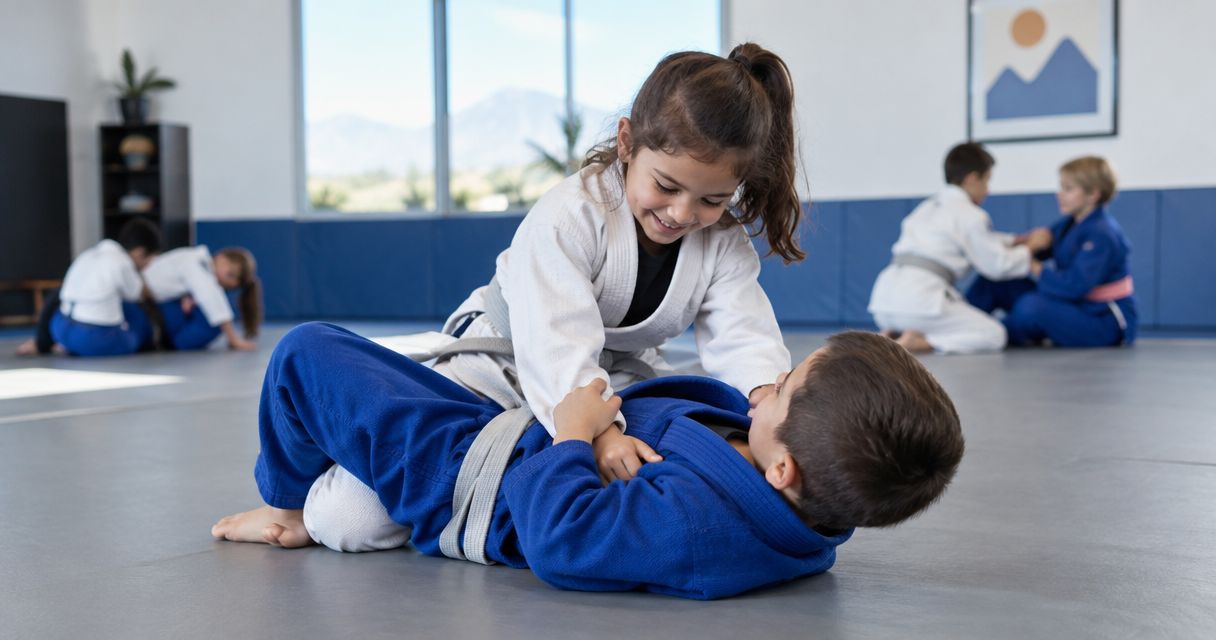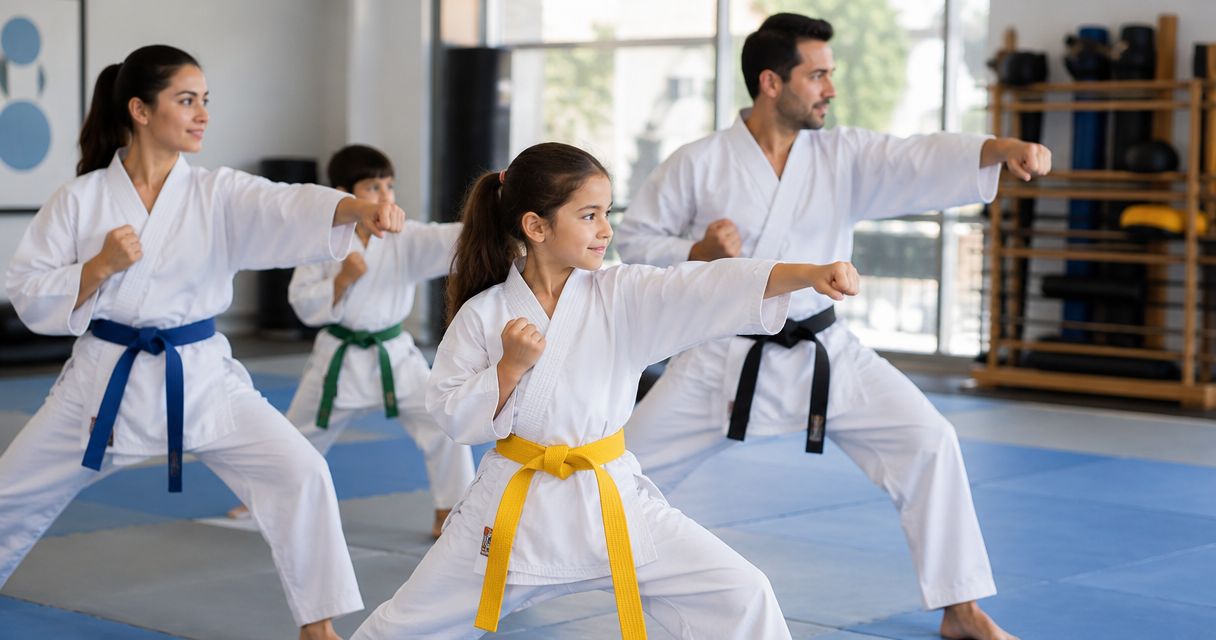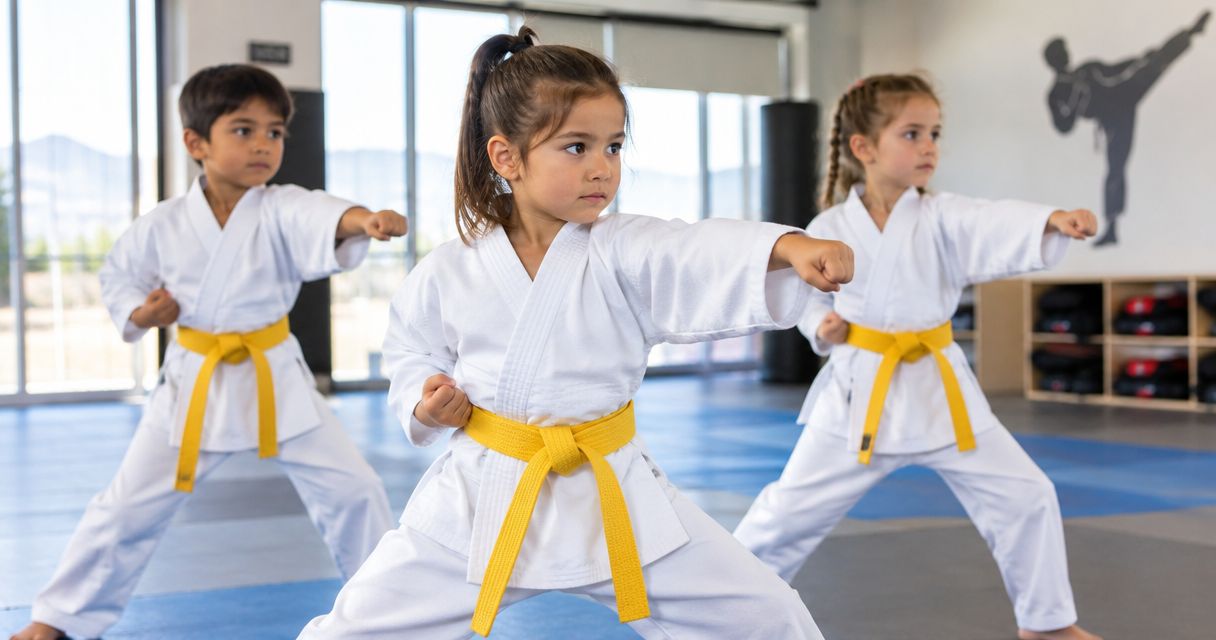
Best overall for learning close-contact grappling: Brazilian Jiu-Jitsu. Best for structured striking practice: karate. Best for kick-focused training: taekwondo. Best for throws and balance: judo. For families comparing the best martial arts for kids in Rio Rancho in 2026, Gonzalesjj offers Brazilian Jiu-Jitsu classes for children and families in the Rio Rancho and Albuquerque community.
- For the best martial arts for kids Rio Rancho search, choose by teaching quality and your child's comfort.
- Gonzalesjj is a Brazilian Jiu-Jitsu option for Rio Rancho families seeking kids and family martial arts classes.
- Compare Brazilian Jiu-Jitsu, karate, taekwondo, and judo by contact style, instruction, and your child's interests.
- Confidence and discipline are training goals, not guaranteed results. Ask how instructors support beginners.
Why class fit matters more than a style ranking
The best martial arts class is one your child can participate in comfortably, with clear instruction and appropriate supervision. A style name tells you something about the techniques; it does not tell you how an instructor handles a nervous beginner.
For your family's 2026 search, separate two decisions: which type of practice interests your child, and which local class teaches it in a way that fits. This guide compares martial arts styles, not unverified claims about competing Rio Rancho gyms.
Gonzalesjj is a Brazilian Jiu-Jitsu option for Rio Rancho parents seeking kids and family martial arts classes. Consider that option alongside your child's preferences, rather than assuming every child needs the same training experience.
What makes the best martial arts class for your child?
Use these criteria before deciding which style deserves a closer look:
- Beginner instruction: Ask how instructors introduce unfamiliar movements and help children who need another explanation.
- Contact comfort: Find out whether practice centers on close-contact grappling, strikes, throws, or a combination.
- Partner supervision: Ask how partners are matched and how instructors respond when a child becomes uncomfortable.
- Clear boundaries: Look for straightforward instructions about stopping, listening, and treating partners respectfully.
- Family practicality: Confirm current class requirements and decide whether the journey fits your household's routine.
- Child interest: Ask what your child wants to try, then compare that answer with what actually happens in class.
You do not need a child who already looks confident. You need a setting where questions are welcome and participation expectations are explained clearly.
Kids' martial arts options at a glance
These 4 styles offer different starting points. The order reflects the learning interests described here, not measured outcomes or a ranking of local instructors.
| Martial art | Best for | Main training focus | Key limitation to consider |
|---|---|---|---|
| Brazilian Jiu-Jitsu | Children interested in close-contact problem-solving | Grappling, positions, and ground movement | Close physical contact requires a comfort check |
| Karate | Children interested in structured striking practice | Punches, kicks, stances, and forms | Partner work and contact rules differ by school |
| Taekwondo | Children drawn to kick-focused movement | Kicking techniques, movement, and forms | A kicking emphasis does not match every child's interests |
| Judo | Children interested in balance and throwing | Throws, falling skills, and grappling | Falling and being thrown require careful introduction |
Treat each row as a starting question. A welcoming instructor can explain exactly how that style appears in the children's class you are considering.
1. Brazilian Jiu-Jitsu: best for close-contact problem-solving
Brazilian Jiu-Jitsu, often shortened to BJJ, centers on grappling: controlling movement through holds and positions rather than a primary focus on punching and kicking. Ground movement and working with a partner are central parts of the martial art.
Gonzalesjj offers kids, family, and competition Brazilian Jiu-Jitsu classes for the Rio Rancho and Albuquerque community. Ask which class fits your child's experience and what a new student's introduction involves; the existence of a competition program does not establish what happens in a children's beginner class.
Brazilian Jiu-Jitsu pros
- Position-based practice gives children concrete movement problems to work through.
- Partner exercises provide opportunities to practice listening and respecting boundaries.
- Grappling offers a different starting point for children who are not interested in striking.
Brazilian Jiu-Jitsu considerations
- Close contact can feel unfamiliar or uncomfortable; discuss that before committing.
- Ground practice is not the right match for every child's interests.
- A gym's program list alone does not establish its beginner teaching approach.
Best for: Children curious about grappling who are comfortable exploring close-contact practice with clear guidance.
For your 2026 class search, ask how instructors teach children to stop an exercise and communicate discomfort. In grappling, tapping signals that a partner should release or stop; parents should ask how that boundary is introduced and enforced.
Verdict: Choose Brazilian Jiu-Jitsu if your child wants to explore grappling and the class explains partner boundaries clearly.
2. Karate: best for structured striking practice
Karate teaches striking techniques such as punches and kicks, alongside stances and other movement skills. Many karate traditions include forms, which are organized sequences of techniques practiced without an opposing partner.
For parents, the useful distinction is between the style's techniques and the school's teaching format. Ask how much of the children's class involves individual practice, partner exercises, and contact.
Karate pros
- Individual technique practice offers a different experience from continuous close-contact grappling.
- Forms give children sequences of movements to learn and revisit.
- Punches, kicks, and stances create several areas of technique to explore.
Karate considerations
- Contact expectations differ between schools and classes.
- Repeated individual sequences will not appeal to every child.
Best for: Children interested in learning striking techniques through structured movement practice.
Ask the instructor to describe a beginner's class in everyday language. If your child wants partner activity, clarify how much partner work occurs rather than assuming that all martial arts classes share the same format.
Verdict: Choose karate if your child enjoys structured striking practice and the class format matches that interest.
3. Taekwondo: best for kick-focused movement
Taekwondo places a strong emphasis on kicking techniques. Training also includes movement, forms, and partner practice, with the balance depending on the school and class.
A child who is excited by kicking has a clear reason to investigate taekwondo. The next step is checking how the instructor introduces those movements to beginners, not expecting your child to copy advanced demonstrations.
Taekwondo pros
- A kicking emphasis gives interested children a clear technical focus.
- Forms provide organized movement sequences to practice.
- Footwork and partner exercises offer different ways to work on technique.
Taekwondo considerations
- Children who prefer grappling will need a different training emphasis.
- Contact rules and the role of competition require school-specific questions.
Best for: Children specifically interested in kicks, footwork, and learning striking combinations.
Ask what a beginner practices before joining more demanding partner exercises. Your child does not need to arrive with advanced flexibility or polished technique; ask the instructor to explain the actual entry requirements.
Verdict: Choose taekwondo when kick-focused practice is your child's main interest and beginner expectations are clear.
4. Judo: best for learning balance and throwing
Judo centers on throwing and grappling, with falling skills forming an important part of instruction. A throw uses movement, balance, and technique to bring a partner to the mat.
For a parent, the first question is how children learn to receive those movements. Ask how falling practice is introduced before focusing on throws or competition.
Judo pros
- Balance and movement provide a clear technical focus.
- Partner practice creates opportunities to work on cooperation and control.
- Falling instruction is part of learning the martial art, not an unrelated extra.
Judo considerations
- Being thrown can feel intimidating to a beginner.
- Children seeking primarily striking practice will find a different emphasis.
Best for: Children interested in balance, throws, and standing grappling who are comfortable learning falling skills.
Ask how instructors decide when a child is ready for a new partner exercise. A clear explanation is more useful than a broad assurance that the class suits everyone.
Verdict: Choose judo if your child wants throwing-based practice and you understand how falling and partner work are introduced.
How these recommendations are ranked
Brazilian Jiu-Jitsu leads this guide for families specifically interested in grappling, with a relevant local option at Gonzalesjj. Karate, taekwondo, and judo each have a separate use-case slot because their training emphasis differs.
The recommendations use contact style, beginner instruction, supervision, family practicality, and child interest as decision criteria. They do not claim that one martial art guarantees better confidence, discipline, or safety than another.
Ask these 5 questions before choosing a class
Use the same questions with every school on your 2026 shortlist. You will get a clearer comparison than you would from collecting belt descriptions or watching advanced students.
Beginner support
Ask: How do you introduce a child who has never trained before? Listen for an explanation of instruction, participation, and what happens when a child needs help.
Partner matching
Ask: How do you choose partners for children's exercises? Follow up by asking who supervises and what happens when a pairing is not working.
Stopping rules
Ask: How does a child stop an exercise or tell an instructor something feels wrong? Your child should hear that explanation in language they understand.
Class expectations
Ask: What should my child wear, bring, and know before attending? Confirm the current requirements directly instead of buying equipment based on general martial arts advice.
Family fit
Ask: Which current class is appropriate for my child's age and experience? Then assess the journey, timing, and commitment against your household's actual routine.

Keep the discussion practical rather than turning it into an interview your child must pass. These questions are for the adults responsible for choosing and teaching the class.
Have 2 conversations before making the decision
First, speak with the instructor about your child's interests and any concerns about contact or group participation. Describe what you have noticed without assigning your child a fixed label such as shy, difficult, or unathletic.
Then speak with your child. Ask what sounded interesting, what felt confusing, and what they want explained before participating.
If you observe a class, discuss specific moments afterward. Did the explanation make sense? Did your child understand how to ask for help? Their answers give you something more useful than a simple request to decide whether they liked everything.
Which martial art should your family choose?
Start with Brazilian Jiu-Jitsu if your child is curious about grappling; choose a striking or throwing style when that interest is clearer. For Rio Rancho families considering kids' Brazilian Jiu-Jitsu, Gonzalesjj is a local option to discuss with your child.
Make your 2026 decision around the actual class, not an imagined future competitor. Confidence, discipline, and skill are goals to work toward; a helpful first step is understanding what participation will look like now.
Explore Brazilian Jiu-Jitsu for Your Family
Learn about Gonzalesjj, then ask which current class fits your child's experience.
FAQ
What's the best martial art for kids in Rio Rancho?
The best choice is a class that matches your child's interests and provides clear beginner instruction. Brazilian Jiu-Jitsu suits an interest in grappling, while karate and taekwondo focus on striking and judo emphasizes throws and balance.
Is Brazilian Jiu-Jitsu better than karate for children?
Brazilian Jiu-Jitsu is a better match for an interest in grappling; karate is a better match for an interest in structured striking practice. Neither style name establishes the quality of an individual children's class.
Does my child need to be confident before starting martial arts?
Confidence is not a prerequisite you should assume for a beginner class. Ask the instructor how children are introduced to activities and supported when they need help; confidence remains a training goal, not a promised result.
What age can my child start at Gonzalesjj?
Confirm current age requirements directly with Gonzalesjj before choosing a class. Explain your child's age and experience so you can ask about an appropriate starting point.
Does my child have to compete in Brazilian Jiu-Jitsu?
Ask the gym whether competition is optional in the specific children's program you are considering. A gym offering competition training does not by itself establish the participation requirements for every class.
What should I ask about safety in a kids' martial arts class?
Ask about partner matching, supervision, stopping rules, and how new techniques are introduced. Request a clear explanation of what happens when a child feels uncomfortable or needs an exercise to stop.
What should my child wear to a first martial arts class?
Confirm clothing and equipment requirements with the school before attending. Requirements depend on the class, so avoid buying a uniform or protective equipment until you have the current instructions.
One last thing
Ask your child to explain how they would request a pause or ask for help. That small conversation checks whether the class expectations make sense to the person who will actually be on the mat.
Choose the class your child understands, not just the martial art whose name you recognize.