The best jiu jitsu classes for 4 year olds are beginner groups that explicitly accept that age and teach through clear, closely supervised activities. For your 2026 Rio Rancho search, put an age-appropriate beginner class first, ask about an observation-first introduction for a hesitant child, and consider family training only when the format suits preschoolers.
- Choose jiu jitsu classes for 4 year olds by confirmed age eligibility, supervision, and your child's comfort.
- Gonzalesjj offers kids and family Brazilian Jiu-Jitsu; confirm acceptance of four-year-olds before choosing a class.
- An age-appropriate beginner group is the first option to investigate; family training needs its own suitability check.
- Ask how instructors handle partner matching, stopping, and children who need a break.
Gonzalesjj offers kids and family Brazilian Jiu-Jitsu for the Rio Rancho and Albuquerque community. Gonzalesjj is a local Brazilian Jiu-Jitsu option for families exploring kids and family training. Before choosing a session, confirm whether it accepts children who are 4 years old and how beginners join.
Why this matters
A preschooler's first martial arts experience should start with a suitable teaching environment, not a promise about confidence or future medals. Confidence, discipline, and technique are goals to work toward, not guaranteed results.
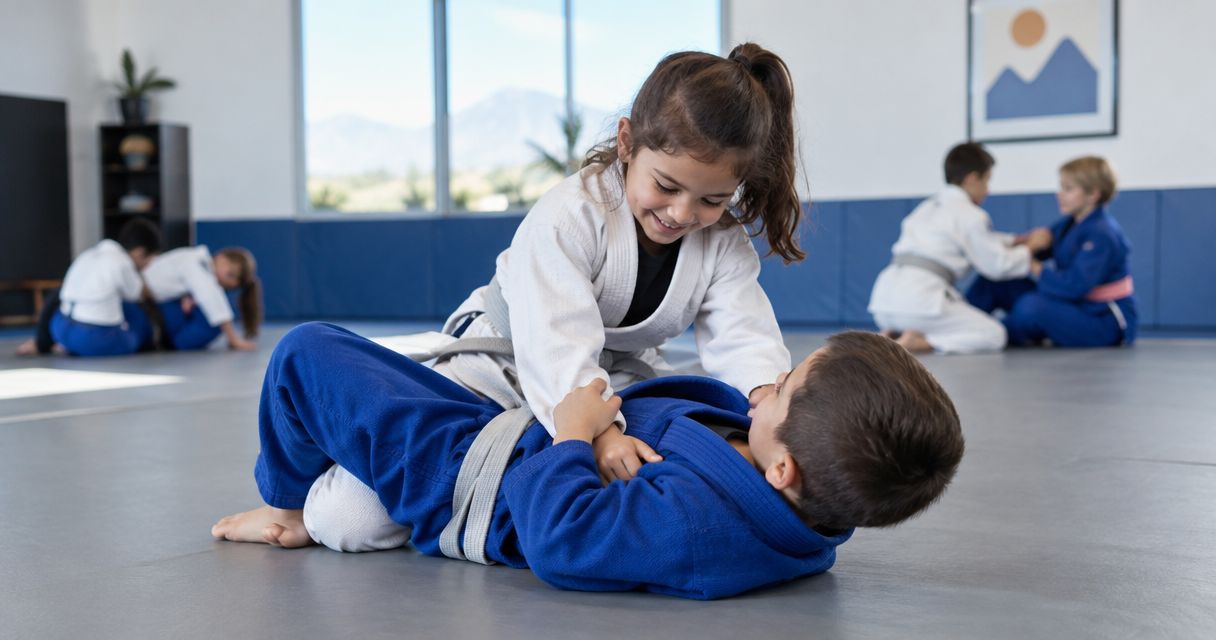
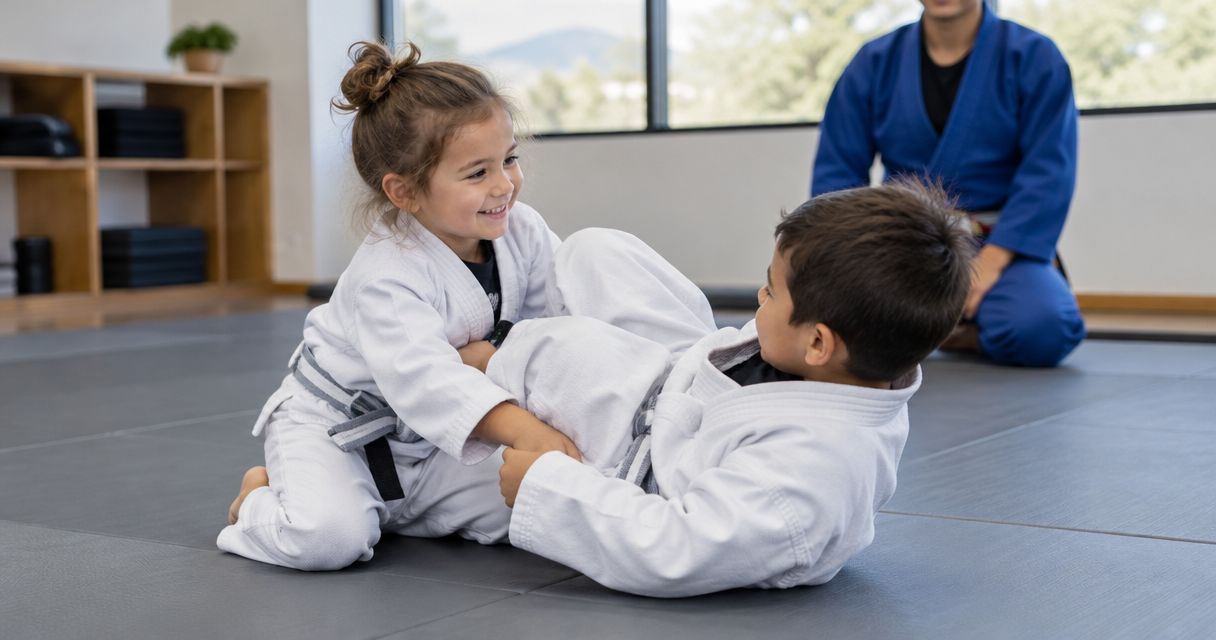
Brazilian Jiu-Jitsu is a grappling martial art: students work with positioning, balance, and controlled physical contact rather than a striking-based format. For a young beginner, ask what that actually means during class. The explanation should tell you what children do, how adults supervise them, and how a child stops participating when needed.
For your 2026 decision, choose the learning environment before choosing the long-term ambition. Competition can be a separate conversation; your immediate question is whether this class fits your child now.
What makes the best class for a four-year-old?
Use these criteria before comparing the options below. A class name alone does not answer them.
- Confirmed age eligibility: Ask whether the specific session accepts four-year-olds, not simply whether the gym teaches children.
- Clear instructions: Look for demonstrations and explanations your child can follow without repeated confusion.
- Active supervision: Ask how instructors monitor partner work and respond when play becomes too rough.
- Thoughtful partner matching: Ask how size, experience, and comfort affect who works together.
- A respectful stopping process: Your child should understand how to ask for help, stop an activity, or take a break.
- Practical family fit: Consider the journey from home, the class time, and whether you can attend without rushing.
Do not let a convenient timetable substitute for confirmed age suitability. A session can work perfectly for your calendar and still be the wrong learning setting.
Best class approaches at a glance
These are ranked approaches to investigate, not claims that every format is offered locally. Confirm the actual age policy and session structure before making plans.
| Rank and approach | Best for | What to look for | Key limitation |
|---|---|---|---|
| 1. Age-appropriate beginner group | A child ready to try group instruction | Explicit acceptance of four-year-olds and clear beginner teaching | A kids label does not establish preschool suitability |
| 2. Observation-first introduction | A child who wants to watch before joining | Permission to observe and a clear plan for entering the class | Watching does not show how participation will feel |
| 3. Age-eligible family training | A household interested in training together | A defined role for the preschooler and suitable instruction | Family does not automatically mean shared instruction for every age |
1. Age-appropriate beginner group: best for group-ready children
An age-appropriate beginner group is the first option to investigate when your child wants to participate alongside other children. Confirm that the session accepts four-year-olds and ask how the instructor introduces someone with no martial arts experience.
Look beyond whether your child copies every movement. Watch how the instructor responds when a child loses track of the activity, needs another demonstration, or hesitates about partner contact.
Beginner group pros:
- Gives you a direct way to assess child-focused teaching.
- Offers a setting for practicing listening and taking turns.
- Lets your child experience learning alongside peers.
Beginner group cons:
- Group instructions can be difficult for a child who needs frequent individual explanations.
- An eligible age does not guarantee the group suits your child's comfort or learning needs.
Ask for 2 examples of beginner activities and how the instructor adapts them when a child struggles. Concrete explanations are more useful than broad promises about building winners.
Best for: A child who wants to join a group and whose age the instructor has explicitly accepted.
Verdict: Choose this first when eligibility, supervision, and your child's willingness align.
2. Observation-first introduction: best for a hesitant beginner
An observation-first introduction means asking whether your child can watch before deciding how to participate. Treat it as an entry approach, not a separate program that every gym provides.
For a child unsure about a new room, unfamiliar adults, or close physical contact, watching gives you something concrete to discuss afterward. Ask what looked interesting, what felt confusing, and whether your child wants another look.
Observation-first pros:
- Gives your child a way to understand the setting before joining.
- Lets you observe instructions, transitions, and adult responses.
- Creates a starting point for a practical conversation with the instructor.
Observation-first cons:
- A child who enjoys watching can still dislike participating.
- Observation alone does not establish readiness for partner work.
If observation is permitted, ask where families should sit and how a child moves from watching to joining. Avoid promising your child that joining will happen immediately; agree on the process with the instructor first.
Best for: A child interested in Jiu-Jitsu who wants familiarity before participation.
Verdict: Hold enrollment until you understand the introduction process and your child's response.
3. Age-eligible family training: best for shared family interest
Family training is worth investigating when more than one person in your household wants to practice martial arts. The essential question is what family means in that particular program: shared instruction, separate age groups, or another arrangement.
Gonzalesjj offers family Brazilian Jiu-Jitsu, but you should confirm the format and preschool eligibility directly. Do not assume a parent participates beside a four-year-old or that every family member attends the same session.
Family training pros:
- Gives you a shared subject to discuss and encourage at home.
- Lets you evaluate martial arts as a family interest rather than an isolated activity.
- Creates an opportunity to ask about a suitable path for each interested family member.
Family training cons:
- A family program still needs an explicit age check for your child.
- A parent's enthusiasm does not establish a preschooler's readiness.
Keep your child's experience separate from your own training goals. If you want demanding practice while your child needs a gentle introduction, ask how the program handles those different needs.
Best for: Families with shared interest and a confirmed, age-appropriate role for the preschooler.
Verdict: Choose only after the gym explains exactly how your child participates.
How these approaches are ranked
The ranking puts age eligibility and teaching fit ahead of convenience. A suitable beginner group is the default to investigate; observation addresses uncertainty about joining, while family training addresses shared household interest.
This is a decision framework, not a claim that one local instructor outperforms another. For your 2026 shortlist, compare actual sessions using the same criteria rather than comparing general descriptions of entire gyms.
What should you ask before the first class?
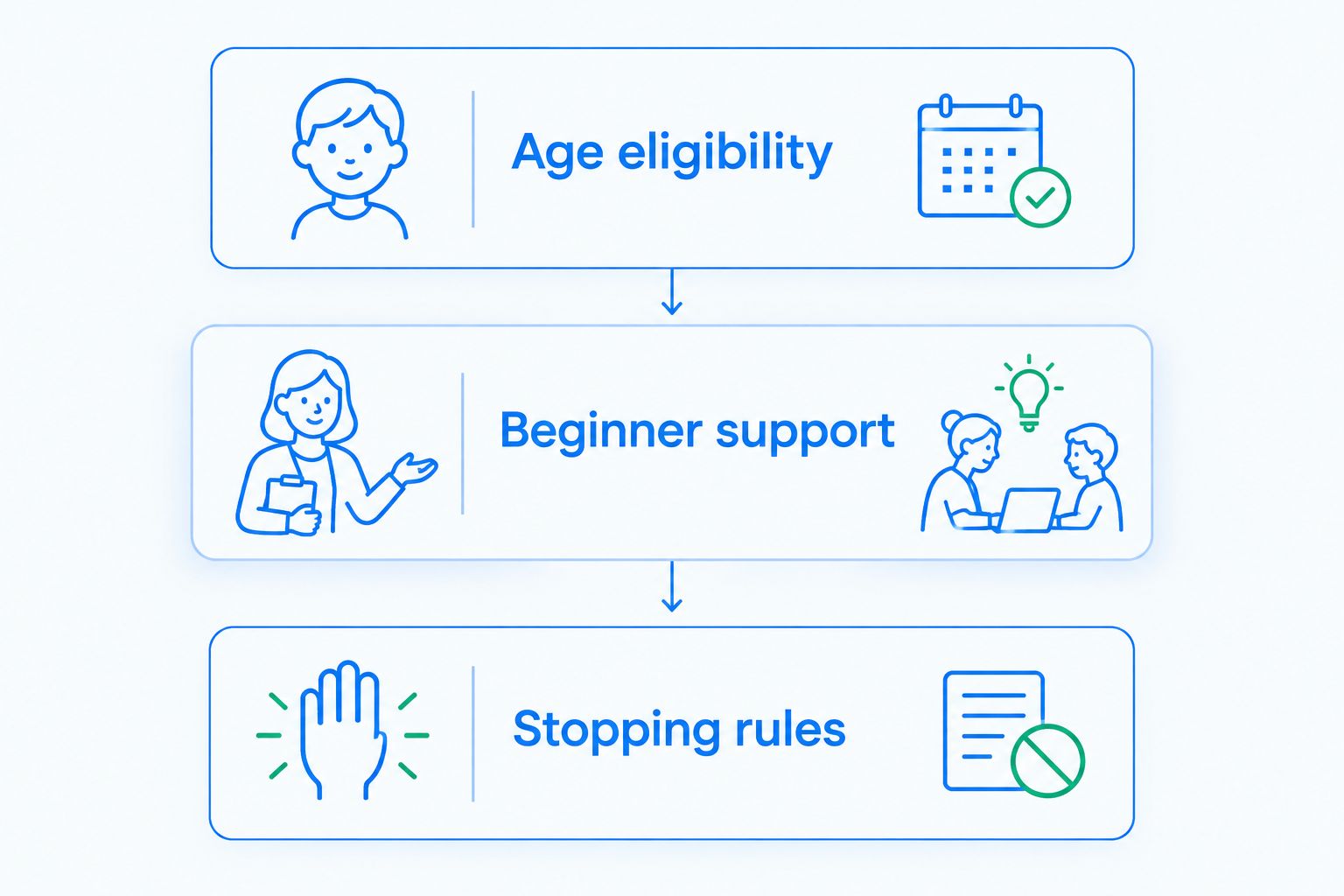
Start with 3 questions that establish whether a visit makes sense:
- Age eligibility: Does this specific session accept a child who is 4 years old?
- Beginner support: What happens when a new child cannot follow an activity or does not want partner contact?
- Stopping rules: How do children signal that they want an activity to stop, and how do instructors respond?
These questions put the conversation on practical teaching rather than promises. Ask for plain-language answers you can explain to your child before arriving.
Next, check the class schedule and confirm which session the instructor recommends for your child. For a 2026 visit, verify the current session details directly rather than relying on an old saved timetable.
Before leaving home, ask what your child should wear, what equipment is needed, and how early the gym wants you to arrive. Follow the gym's instructions instead of purchasing equipment based on a general online checklist.
Plan your family's next step
Review the schedule, then confirm age eligibility and the right beginner session for your child.
What should parents notice during a visit?
Watch the teaching as closely as you watch your child. A child's first response matters, but the instructor's response to uncertainty tells you how the class handles beginners.
Look for understandable demonstrations and clear boundaries around physical contact. Ask questions when you cannot tell whether an activity is suitable; watching from the side does not give you the full explanation.
Useful observations include:
- Instructions: Can your child understand what to do next?
- Transitions: Does the instructor explain when an activity starts and finishes?
- Partner work: How are partners selected and supervised?
- Discomfort: What happens when a child looks upset or asks to stop?
- Parent communication: Can you get a clear explanation of what happened during class?
Your child does not need to perform perfectly to make the visit useful. Give yourself 1 priority: understand whether the setting offers an appropriate next step, not whether your child looks talented immediately.
Afterward, ask open questions. What did your child like? Was anything uncomfortable? Would your child like to return? Treat those answers as part of the decision rather than something to overcome.
Which class approach should you choose?
Choose an explicitly age-eligible beginner group as your default. If your child wants familiarity first, ask about observing; if the whole household wants to train, investigate family instruction without skipping the preschool suitability check.
For families considering Gonzalesjj Jiu-Jitsu classes, the next step is to confirm the age policy and recommended session. Membership should follow that conversation, not precede it.
A useful 2026 decision is specific: this session, this teaching approach, and this child's readiness. You do not need to decide now whether your child will eventually compete.
FAQ
What are the best jiu jitsu classes for 4 year olds near Rio Rancho?
Start with a beginner class that explicitly accepts four-year-olds and provides clear instruction and active supervision. Gonzalesjj offers kids and family Brazilian Jiu-Jitsu serving the Rio Rancho and Albuquerque community; confirm preschool eligibility and the recommended session directly.
Is four too young to start Brazilian Jiu-Jitsu?
Age alone does not establish whether a particular class fits your child. Confirm the program's age policy and discuss your child's ability to follow instructions, communicate discomfort, and participate in the offered activities.
Can my child watch a Jiu-Jitsu class before joining?
Ask the gym whether observation is permitted and how it works. If it is allowed, confirm where you can watch and how the instructor handles a child's transition into participation.
Is a family class better than a kids class for a four-year-old?
A family class is not automatically a better fit for a four-year-old. Choose the format that explicitly accepts your child's age and provides suitable instruction, supervision, and partner arrangements.
What should my four-year-old wear to a first Jiu-Jitsu class?
Follow the gym's clothing and equipment instructions for the specific session. Ask before buying a gi, the training uniform used in some Jiu-Jitsu classes, or other equipment.
Will Jiu-Jitsu make my child more confident and disciplined?
Confidence and discipline are training goals, not guaranteed outcomes. Ask how the instructor teaches listening, respectful partner work, and persistence without pressuring a hesitant child.
What if my child does not want physical contact?
Tell the instructor before participation and ask how the class handles reluctance about contact. Choose the next step only after you understand the options and your child's comfort.
What should I ask about membership before enrolling?
Ask for the current membership terms, required equipment, payment commitments, and cancellation policy. Confirm age eligibility and class fit before agreeing to enrollment.
One last thing
Ask the instructor, What happens when a child says stop? The answer turns a broad discussion about safety into a specific explanation of teaching and supervision.
That conversation matters more than whether your child learns a named technique on the first visit. Choose a setting where you understand the expectations and your child has a clear way to ask for help.