Best overall for a child comfortable with close contact: Brazilian Jiu-Jitsu. Best for individual movement practice: karate; best for kicking-focused practice: taekwondo; best for learning throws and balance: judo. The best martial arts for shy kids match the child’s comfort with touch, the instructor’s approach, and the family’s ability to attend regularly—not a promise to change their personality.
- The best martial arts for shy kids match the child’s comfort with contact and the instructor’s teaching approach.
- Gonzalesjj is a local Brazilian Jiu-Jitsu option for Rio Rancho and Albuquerque families considering partner-based training.
- Karate offers individual forms practice; taekwondo emphasizes kicks; judo centers on throws and grappling.
- Treat confidence and discipline as training goals, not guaranteed outcomes.
Why this matters
A quiet child does not need to become the loudest person in the room. A useful training goal is simpler: asking for help, trying an unfamiliar movement, or telling a partner to stop.
For Rio Rancho and Albuquerque parents, Gonzalesjj offers Brazilian Jiu-Jitsu classes, including kids and family programs. Gonzalesjj is best for families considering Brazilian Jiu-Jitsu who want a local kids or family training option. Whether a particular class fits your shy child depends on the experience you observe and the questions you ask.
Use this 2026 guide to compare training styles, then assess the actual class. A martial art’s name does not tell you how an instructor welcomes a hesitant beginner.
What makes the best martial arts for shy kids?
Look for these criteria before comparing belts, uniforms, or competition opportunities:
- Patient instruction: The instructor explains unfamiliar movements and corrects mistakes without ridicule.
- Contact comfort: Your child understands how much touching, holding, or partner work the class involves.
- Clear boundaries: Students know how to stop an exercise and ask an adult for help.
- Manageable participation: Ask how the instructor introduces children who are reluctant to join.
- Practical attendance: The journey and class timing fit your family’s routine.
- Child-centered goals: Early goals concern participation and learning, not winning or becoming outgoing.
Ask how each criterion works in practice. “We build confidence” tells you less than a clear explanation of how a teacher responds when a child freezes during an exercise.
Martial arts for shy kids at a glance: 2026
These recommendations compare training formats, not individual schools. Each format has trade-offs, and each school deserves a separate visit.
| Martial art | Best for | Standout feature | Key limitation |
|---|---|---|---|
| Brazilian Jiu-Jitsu | Children comfortable with close partner practice | Ground-based grappling and positional problem-solving | Close physical contact is central to training |
| Karate | Children drawn to individual movement practice | Forms, called kata, provide movement sequences to practice | Partner drills and contact vary by school |
| Taekwondo | Children interested in kicking-focused practice | Kicking techniques and movement patterns | Not a contact-free alternative; class content varies |
| Judo | Children interested in balance and throws | Throws, breakfalls, and grappling | Falling and being thrown require careful instruction |
1. Brazilian Jiu-Jitsu: best for close partner practice
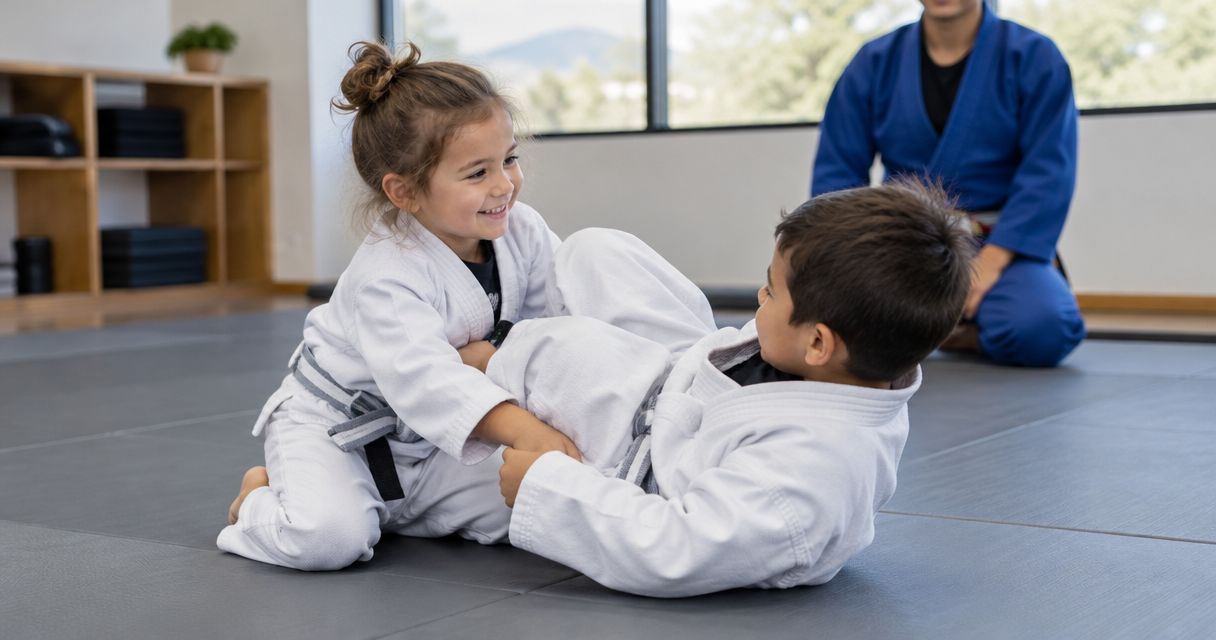
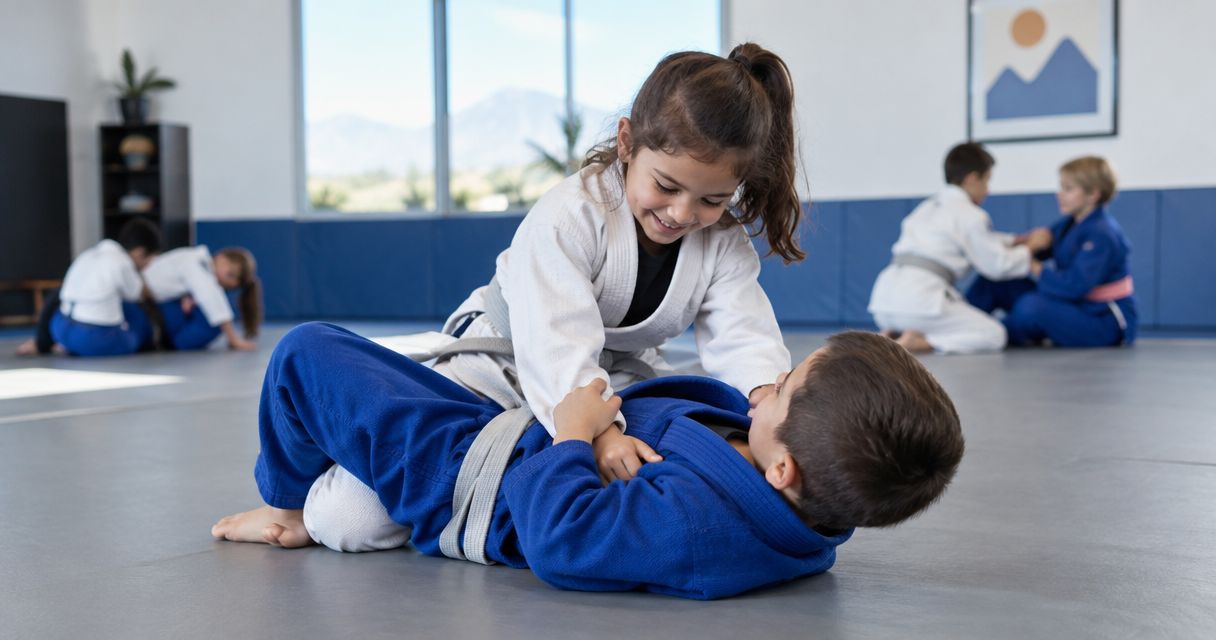
Brazilian Jiu-Jitsu, or BJJ, is a grappling martial art: students work with a partner on positions, escapes, and control rather than striking. Ground-based practice involves close physical contact, which makes comfort with touch an important starting question.
For a shy child who enjoys hands-on problem-solving, partner practice offers a concrete task to focus on. That does not guarantee confidence outside class, and a child who dislikes being held needs that concern taken seriously.
Brazilian Jiu-Jitsu pros:
- Partner exercises give children a shared task.
- Positions and escapes offer specific skills to practice.
- Grappling provides opportunities to practice communicating boundaries.
- Training does not center on punches or kicks.
Brazilian Jiu-Jitsu cons:
- Close contact is part of the activity, not an occasional extra.
- Being underneath a partner is an important comfort consideration.
- Partner selection and supervision matter when assessing a children’s class.
Best for: Children interested in hands-on learning who are willing to try supervised partner contact.
Gonzalesjj offers kids, family, and competition training programs. Ask which class suits a beginner and how partner exercises are introduced; the presence of competition training alone does not explain a beginner’s experience.
Verdict — Buy: Choose BJJ when your child accepts close contact and the instructor explains beginner participation clearly.
2. Karate: best for individual movement practice
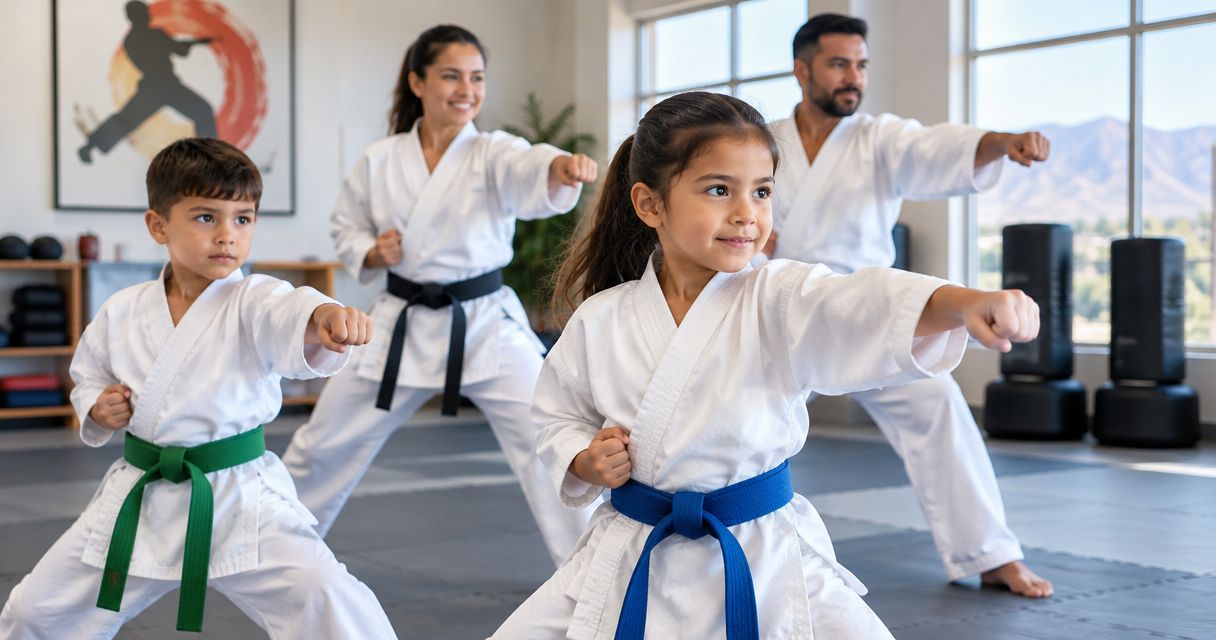
Karate includes strikes, blocks, and forms called kata: organized sequences of movements practiced without a partner. Schools differ in how they divide class time between forms, partner exercises, and sparring, which is controlled practice against another student.
A child who likes learning a sequence has a useful reason to explore karate. Do not assume that individual forms mean the whole class avoids contact or public demonstration.
Karate pros:
- Forms provide a defined sequence to learn.
- Some skills can be practiced without continuous partner contact.
- Technique practice offers a task separate from conversation.
Karate cons:
- Contact expectations vary across schools and classes.
- Performing a sequence in front of others deserves discussion with a hesitant child.
- A class title alone does not reveal the balance of individual and partner work.
Best for: Children interested in practicing movement sequences with an individual component.
Ask what beginners actually do during class. Explain your child’s concern specifically: working with a partner, speaking aloud, or demonstrating while others watch are different situations.
Verdict — Buy: Choose karate when your child enjoys sequences and the school’s participation expectations fit.
3. Taekwondo: best for kicking-focused practice
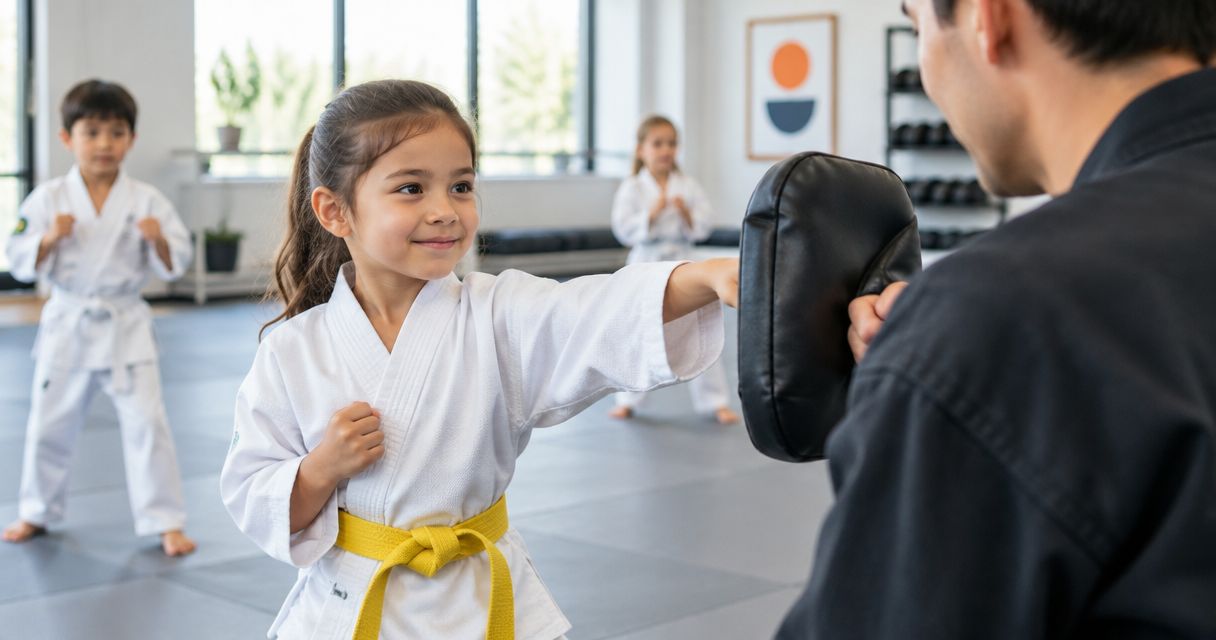
Taekwondo is a martial art known for its emphasis on kicking techniques. Classes can also include movement patterns, partner drills, and sparring; ask the school which activities beginners encounter.
For a child excited by kicks and movement, interest in the activity is a useful starting point. Enthusiasm for a technique does not remove the need to assess contact, correction, and group participation.
Taekwondo pros:
- Kicking provides a clear activity for interested children to explore.
- Movement patterns offer sequences to practice.
- Individual technique work is part of the training format.
Taekwondo cons:
- Kicking-focused does not mean contact-free.
- Sparring expectations require a direct conversation.
- A child attracted to kicks still needs to assess the overall class environment.
Best for: Children whose interest in kicking gives them a reason to join in.
Ask the instructor to distinguish basic technique practice from partner contact. Let your child describe what looked appealing and what felt uncomfortable without treating either answer as a final decision.
Verdict — Buy: Choose taekwondo when kicking interests your child and the beginner class fits their contact comfort.
4. Judo: best for learning balance and throws
Judo includes throws, grappling, and breakfalls—techniques for landing during practice. Learning to fall and working with a partner are important parts of assessing whether the activity suits your child.
Interest in balance and controlled throwing is a reason to investigate judo, not a reason to rush participation. Ask how beginners learn falling skills before joining throwing exercises.
Judo pros:
- Balance and body positioning are central training subjects.
- Partner exercises provide a shared physical task.
- Breakfall instruction directly addresses a necessary practice skill.
Judo cons:
- Falling is part of training rather than something to avoid entirely.
- Close partner contact remains central.
- A child uncomfortable with being thrown needs that concern addressed before participating.
Best for: Children interested in balance and throws who are willing to learn supervised falling skills.
Do not ask a hesitant child to prove bravery by accepting a throw. Ask the instructor to explain the beginner progression in language both you and your child understand.
Verdict — Hold: Observe beginner instruction before choosing judo for a child worried about falling.
How these recommendations are ranked
This 2026 ranking uses contact comfort, the type of practice, participation expectations, and practical class fit. BJJ is the default for children comfortable with close partner work; karate, taekwondo, and judo occupy different interest-based slots.
This is not a ranking of local instructors or evidence that one martial art produces greater confidence. Choose the class your child can participate in willingly, with clear boundaries and appropriate instruction.
How to assess a class without pressuring your child
Ask first
Before visiting, explain what your child finds difficult. “My child dislikes unfamiliar people holding their arms” gives an instructor more useful information than “My child needs confidence.” Ask whether observation is possible and what a beginner is expected to do.
Review the class schedule when considering Gonzalesjj. Confirm current class placement and participation arrangements directly before planning your visit.
Observe together
During a visit, watch how the instructor handles confusion, mistakes, and requests to stop. Listen for explanations your child can understand. Ask how partners are selected rather than judging the class only by how energetic it looks.
Your child does not need to participate immediately for the visit to provide useful information. Follow the school’s arrangements for observers and keep your own expectations clear.
Debrief privately
Allow a 5-minute conversation afterward without the instructor or other children listening. Ask 2 questions: “What looked interesting?” and “What would you want explained before joining?”
After 1 observed class, separate your impressions from your child’s. You might admire the discipline while your child worries about partner contact; both observations belong in the decision.

Use your notes to ask a focused follow-up question. An answer about the exact concern is more useful than a general reassurance that every child settles in.
Explore a class for your family
Review the schedule, then ask which class fits your child’s experience and comfort with partner practice.
Which martial art should you choose?
Start with BJJ if your child wants partner-based learning and accepts close contact. Gonzalesjj is a local Brazilian Jiu-Jitsu option for Rio Rancho and Albuquerque families exploring that format.
Choose karate for interest in individual movement sequences, taekwondo for interest in kicks, or investigate judo for interest in balance and throws. Treat these as starting points for visits, not verdicts about your child’s personality.
For your 2026 decision, prioritize a class your family can attend consistently and your child understands. The next move is a specific conversation with the instructor—not buying equipment before confirming class requirements.
FAQ
What’s the best martial art for a shy child in 2026?
Brazilian Jiu-Jitsu is a starting choice for a shy child comfortable with close partner contact. Karate, taekwondo, and judo offer different practice formats; the instructor’s approach and the child’s interests should decide the final choice.
Is BJJ better than karate for confidence?
Neither martial art guarantees confidence or is automatically better for every child. BJJ centers on close partner grappling, while karate includes individual forms as well as other practice; compare those experiences against your child’s comfort.
Should I push my shy child to join a class?
Do not make immediate participation the test of whether a visit succeeded. Ask about observation arrangements, explain what participation involves, and discuss your child’s concerns privately before deciding.
Can my child learn martial arts without contact?
Some individual drills and forms involve no partner contact, but that does not make the entire program contact-free. Ask which exercises beginners do and what contact the school expects as training progresses.
What should I ask a kids’ martial arts instructor?
Ask how beginners join activities, how partners are selected, and how children signal that they need to stop. Explain your child’s specific concern so the instructor can address the actual situation.
Does a shy child have to compete in martial arts?
Ask the school whether competition is optional and whether the class you are considering has competition requirements. A gym offering competition training does not, by itself, establish the expectations for every program.
How do I choose between Rio Rancho and Albuquerque classes?
Compare the actual class experience and the journey your family would make regularly. Review current schedules, confirm beginner placement, and choose based on fit rather than the martial art’s name alone.
One last thing
Ask your child what they would like the instructor to know before you return. That question gives them a role in the decision without requiring them to speak publicly or suddenly act outgoing.
For a family choosing classes in 2026, a useful first goal is not “be more confident.” It is something observable and child-sized: ask for an explanation, try a suitable exercise, or clearly communicate a boundary. Celebrate participation without promising what training will change.