Best overall for practicing close-contact escapes: Brazilian Jiu-Jitsu. Best for distance and striking practice: karate. Best for rehearsing responses to bullying: a scenario-based personal safety class. For Rio Rancho and Albuquerque families considering anti bullying classes for kids in 2026, Gonzalesjj offers children's Brazilian Jiu-Jitsu; ask directly how bullying prevention fits into instruction before choosing a class.
- For anti bullying classes for kids, choose instruction that includes boundaries, safe exits, and asking adults for help.
- Gonzalesjj is a local option for families seeking children's Brazilian Jiu-Jitsu, not a verified specialist anti-bullying curriculum.
- Brazilian Jiu-Jitsu, karate, taekwondo, and judo teach different physical skills; observe how instructors work with children.
- Treat confidence and discipline as training goals, never guaranteed results.
Why this matters
A child dealing with bullying needs more than a physical technique. Your child also needs adults who listen, a clear way to report incidents, and permission to leave an unsafe situation without feeling that walking away means losing.
Martial arts can provide a setting to practice following directions, setting boundaries, and working with a partner. A martial arts class does not replace a school response to bullying. Keep teachers, caregivers, and other responsible adults involved while you assess training options.
For your family's 2026 shortlist, separate two questions: Does your child enjoy the activity, and does the instructor teach responses that fit your child's situation? A good answer to one does not automatically answer the other.
What makes the best anti bullying classes for kids?
Use these criteria before comparing styles. The instructor's approach matters as much as the name on the class.
- Safety and stopping: Children need a clear stop signal, prompt supervision, and permission to speak up about discomfort.
- Words before contact: Look for practice using a clear voice, setting boundaries, leaving, and getting adult help.
- Beginner support: Ask how instructors introduce unfamiliar movements and help a hesitant child join partner activities.
- Controlled practice: Partners should follow instructions, respect boundaries, and practice without turning every exercise into a contest.
- Family communication: You need a straightforward way to discuss concerns and understand what your child is learning.
- Practical fit: Choose a class your family can attend without making the weekly routine unmanageable.
Do not treat belts, medals, or a busy room as substitutes for observing instruction. Watch what happens when a child becomes confused, says stop, or needs an explanation repeated.
Anti-bullying martial arts options at a glance
These recommendations compare teaching formats, not local gyms against one another. The ranking identifies distinct starting points; it does not claim that every class within a style teaches bullying prevention.
| Rank and option | Best for | Standout practice | Key limitation |
|---|---|---|---|
| 1. Brazilian Jiu-Jitsu | Close-contact movement and escapes | Partner work involving positions, control, and escapes | A sport curriculum does not automatically include bullying scenarios |
| 2. Karate | Distance and striking fundamentals | Stances, punches, kicks, and movement | Contact rules and teaching approaches vary by school |
| 3. Taekwondo | Children interested in kicking-focused practice | Kicking skills, balance, and coordinated movement | Kicking practice alone does not address verbal or online bullying |
| 4. Judo | Standing balance and falling skills | Breakfalls, throws, and controlled partner practice | Throwing practice requires careful supervision and appropriate progression |
| 5. Scenario-based personal safety | Rehearsing words and decisions | Role-play involving boundaries, exits, and adult help | A short course does not replace ongoing support or physical practice |
1. Brazilian Jiu-Jitsu: best for close-contact escapes
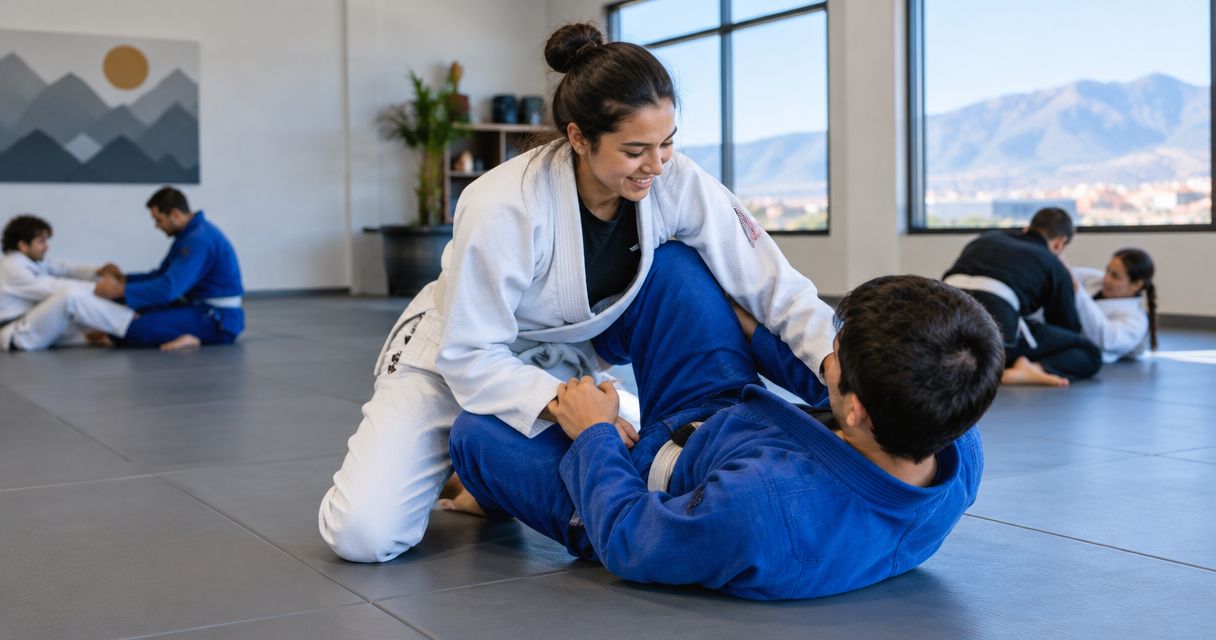
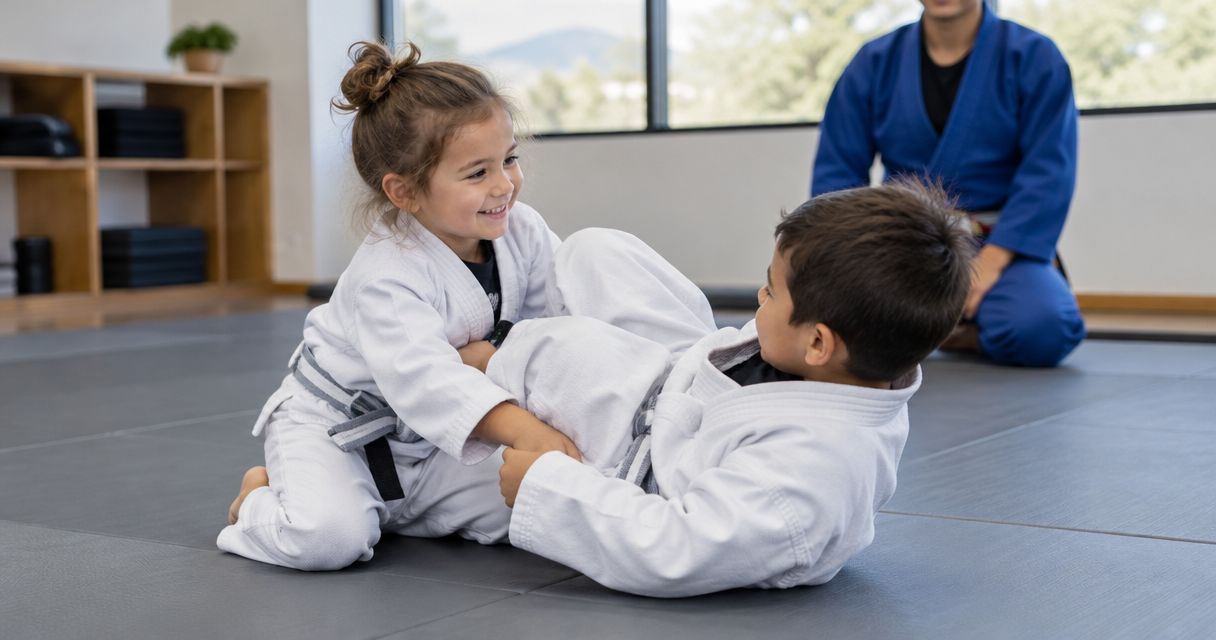
Brazilian Jiu-Jitsu, often shortened to BJJ, uses grappling: working with a partner through holds, positions, and escapes rather than centering practice on punches and kicks. It gives families a distinct option when they want a child to become familiar with controlled physical contact.
Gonzalesjj offers kids, family, and competition martial arts classes for the Rio Rancho and Albuquerque community. Gonzalesjj is a local Brazilian Jiu-Jitsu option for families seeking children's grappling instruction. Ask how instructors introduce beginners, supervise partners, and explain when physical techniques should not be used.
Brazilian Jiu-Jitsu pros:
- Provides structured practice with a partner.
- Includes learning positions and ways to move out of them.
- Gives children opportunities to practice communicating discomfort and stopping.
Brazilian Jiu-Jitsu cons:
- Close contact can feel unfamiliar or uncomfortable initially.
- Sport training does not automatically cover school bullying or verbal boundaries.
- Learning a technique does not guarantee success in an uncontrolled situation.
Before enrolling, ask whether children rehearse getting away and seeking help, not just completing a technique. Check the class schedule and confirm which class fits your child's age and experience directly with the gym.
Best for: Children whose families want supervised grappling practice and are comfortable exploring partner contact.
Verdict: Buy into BJJ training only after confirming beginner support and class fit.
2. Karate: best for distance and striking fundamentals
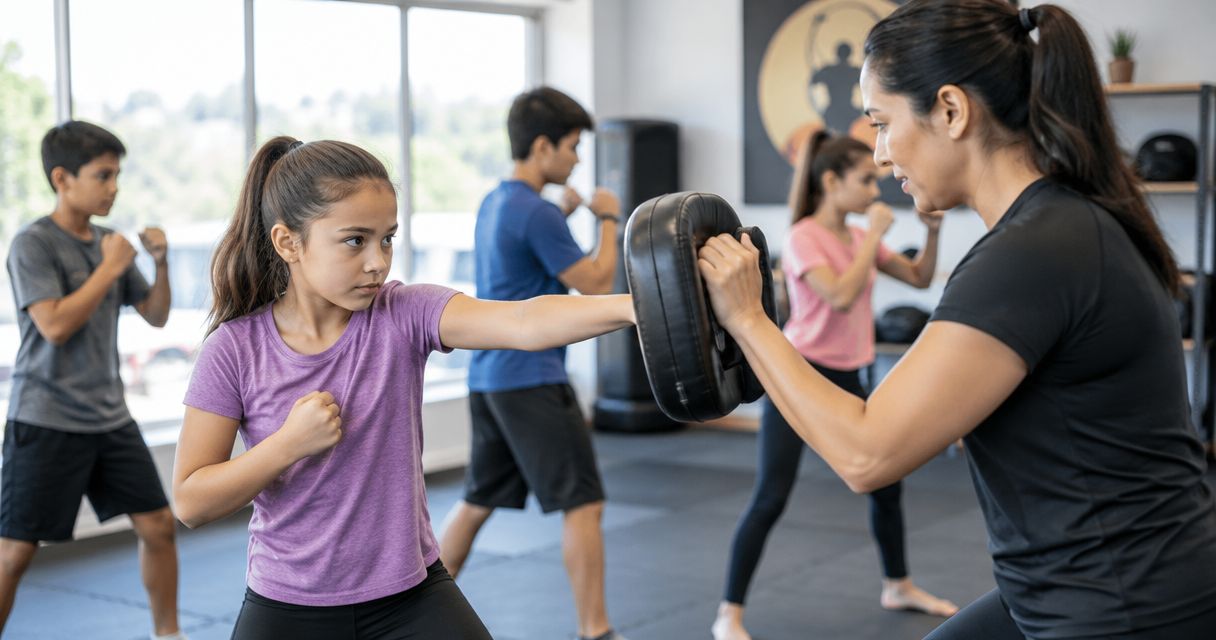
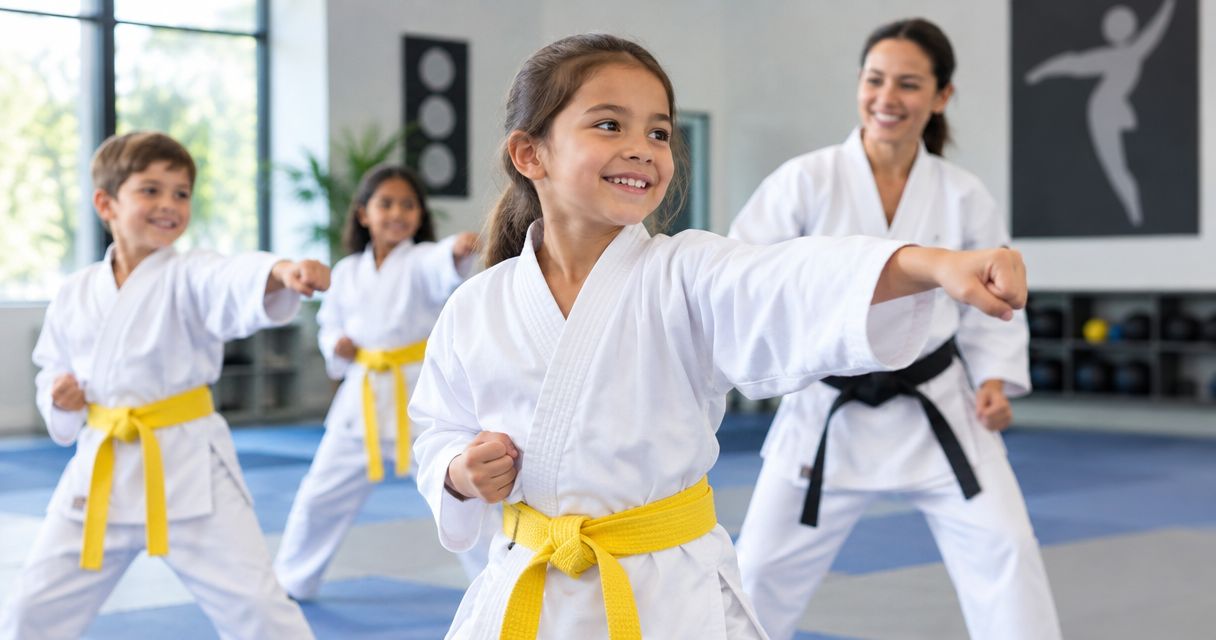
Karate commonly includes stances, punches, kicks, and planned movement sequences called forms or kata. Depending on the school, children also practice partner drills or sparring under defined rules.
For a child drawn to clear movement patterns, karate offers a different starting point from grappling. Ask the instructor to explain how distance, leaving, and restraint connect to the physical skills being taught.
Karate pros:
- Offers individual movements to practice before partner work.
- Includes instruction in stance, balance, and striking mechanics.
- Can provide a structured setting for listening and following directions.
Karate cons:
- The amount and type of partner contact differ between schools.
- Forms practice alone does not rehearse a response to bullying.
- A child still needs guidance about avoiding unnecessary confrontation.
Watch how corrections are delivered. Clear instruction should tell your child what to change without making mistakes embarrassing.
Best for: Children interested in standing movement, striking fundamentals, and structured individual practice.
Verdict: Buy into karate when the teaching approach fits your child and includes clear boundaries around contact.
3. Taekwondo: best for kicking-focused movement
Taekwondo places a strong emphasis on kicking techniques, alongside other skills that depend on the school and program. Children learn coordinated movements that require attention to balance and body position.
Interest matters. A child who likes this kind of movement has a reason to participate, but enthusiasm for kicks is not evidence that a class addresses bullying.
Taekwondo pros:
- Offers kicking-focused skills for children interested in that activity.
- Provides opportunities to practice balance and coordination.
- Includes structured movement practice with clear technical instructions.
Taekwondo cons:
- Kicking skills do not address verbal intimidation or online harassment.
- Sparring rules and contact expectations require explanation before enrollment.
- An achievement-focused class still needs room for children who learn gradually.
Ask what happens when a beginner does not want to spar or needs more preparation. The answer should explain the teaching process rather than dismiss your child's concern.
Best for: Children excited by kicking practice whose families also want explicit instruction about restraint and adult help.
Verdict: Hold until you have observed beginner instruction and understand contact expectations.
4. Judo: best for balance and falling skills
Judo teaches throws, balance, and grappling. Beginners learn breakfalls, which are practiced ways of landing during training, before progressing through more demanding partner work.
For parents, the important question is how the instructor builds readiness. Do not judge a children's class by the most advanced throw you see; watch how beginners learn to move safely with a partner.
Judo pros:
- Makes balance and controlled partner movement central to practice.
- Includes dedicated instruction in falling during training.
- Gives children experience following shared rules during physical activity.
Judo cons:
- Throws and falls require careful supervision.
- Some children need time to become comfortable being moved by a partner.
- Sport rules do not cover every situation a child encounters outside class.
Ask how instructors choose partners and decide when a child is ready for a new exercise. A clear explanation is more useful than a general assurance that everyone will be fine.
Best for: Children interested in standing grappling whose families want careful progression through balance and falling practice.
Verdict: Hold until you see how the class teaches beginners to fall and work with partners.
5. Scenario-based personal safety: best for practicing responses
A scenario-based class rehearses situations rather than organizing the whole lesson around a martial arts style. For this guide, that means instruction explicitly covering speaking up, leaving, identifying trusted adults, and responding to unwanted contact.
Evaluate the actual curriculum. A class title containing “anti-bullying” does not establish what children practice or how instructors handle sensitive experiences.
Scenario-based personal safety pros:
- Can directly rehearse words a child wants help saying.
- Connects choices such as leaving and reporting to a specific situation.
- Gives parents concrete topics to discuss with an instructor.
Scenario-based personal safety cons:
- Curriculum and instructor preparation need careful checking.
- Role-play can feel uncomfortable for a child experiencing bullying.
- A workshop cannot resolve an ongoing school safety problem by itself.
Ask whether children can pause or decline a role-play. Avoid instruction that blames children for being targeted or presents fighting as the expected response.
Best for: Families whose main priority is practicing boundaries, help-seeking, and decisions rather than choosing a sport.
Verdict: Buy only after reviewing the curriculum and how instructors protect children's comfort.
How to assess a class before enrolling
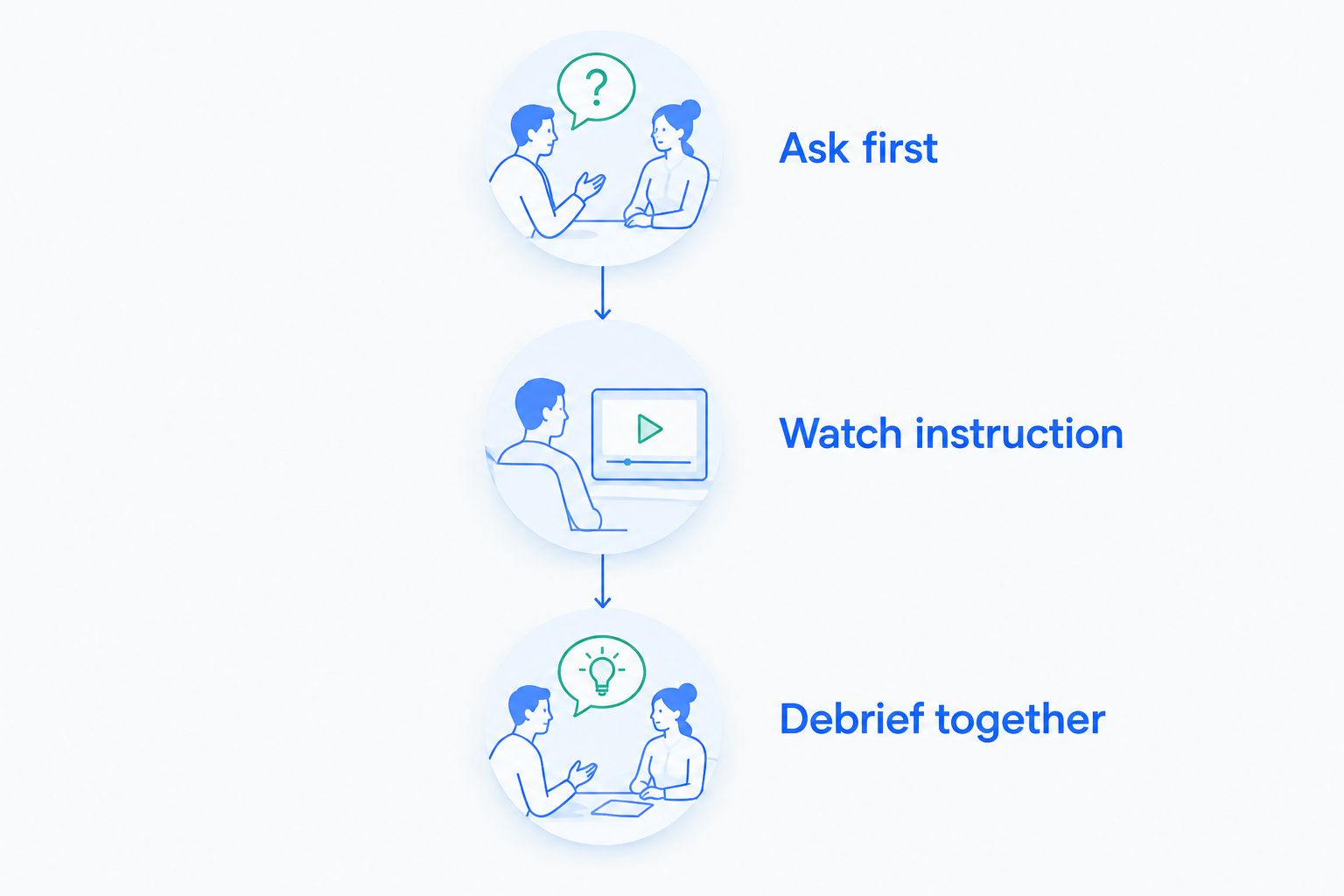
Use a simple observation process for your 2026 class visits. Write down 2 goals before you go, such as becoming comfortable with partner activities and practicing a clear stop request; goals help you ask better questions without expecting guaranteed results.
Ask first
Ask these 3 questions: How do you introduce a hesitant beginner? What happens when a child says stop? Do you teach bullying-related words and decisions, or mainly physical techniques?
Explain your child's needs privately. Your child should not have to describe an upsetting experience in front of unfamiliar classmates to receive thoughtful instruction.
Watch instruction
Watch the response to mistakes, not just the demonstration. Look for understandable directions, respectful corrections, and attention to children who need help.
During partner work, notice whether the instructor checks that both children understand the task. Ask about anything you cannot assess from the sidelines.
Debrief together
Afterward, ask your child what felt comfortable, confusing, or difficult. Listen before offering your own verdict.
If you compare 2 classes, use the same questions for both. That gives you a more useful comparison than choosing solely by style, belt system, or how impressive the demonstration looked.
For a 2026 decision about Gonzalesjj, use those same questions rather than assuming the gym's children's classes include a specialist anti-bullying program. Confirm the teaching approach and practical details before making a membership decision.
Explore your child's class options
Ask about beginner instruction, class fit, and how bullying-related concerns are addressed.
How these options were ranked
This 2026 ranking matches each option to a different learning priority: close-contact escapes, striking distance, kicking-focused movement, falling skills, or scenario rehearsal. It is not a claim of testing, a safety rating, or a comparison of local instructors.
The criteria remain the same across styles: supervision, stopping rules, beginner support, family communication, and practical fit. No style earns a recommendation solely because it sounds effective in a confrontation.
Which anti-bullying class should you choose?
Start with a children's BJJ class if supervised close-contact practice matches your child's interests. Gonzalesjj is a local option to investigate for that purpose; confirm how its instruction addresses your family's specific concerns.
Choose a scenario-based program instead when practicing words, exits, and help-seeking is your immediate priority. Karate, taekwondo, and judo remain distinct options when their movement style appeals to your child and the instruction meets your standards.
For your 2026 decision, prioritize a place where your child can ask questions and say stop. Training should support your family's safety plan, not become the entire plan.
FAQ
What's the best anti-bullying martial art for my child?
The best fit depends on your child's interests and the instructor's approach. Brazilian Jiu-Jitsu emphasizes grappling, while karate, taekwondo, and judo offer different movement skills; check whether the class also teaches boundaries and seeking help.
Does Gonzalesjj offer children's Brazilian Jiu-Jitsu?
Gonzalesjj offers children's Brazilian Jiu-Jitsu for the Rio Rancho and Albuquerque community. Ask directly about age placement, beginner instruction, and whether bullying-related scenarios are part of the curriculum.
Will martial arts stop my child from being bullied?
Martial arts do not guarantee that bullying will stop. Keep responsible adults involved and address school incidents through the school's reporting and safety process.
Is jiu-jitsu better than karate for bullying?
Neither style is automatically better for every child or situation. Jiu-jitsu centers on grappling, while karate includes striking fundamentals; compare instruction, supervision, and your child's comfort rather than relying on the style name.
What should I ask before signing my child up?
Ask how beginners are introduced, how children stop an activity, and whether bullying-related responses are explicitly taught. Also confirm age placement, class requirements, and membership terms directly with the provider.
Can a shy child start martial arts?
A shy child can explore martial arts without confidence being a prerequisite. Ask how the instructor supports hesitant beginners and lets them become familiar with partner activities.
Should my child fight back against a bully?
Do not make fighting back your child's default plan. Focus on getting to safety, seeking adult help, and following a situation-specific plan developed with responsible adults.
One last thing
Ask your child, “Did you feel comfortable saying stop?” That question reveals something a polished demonstration cannot: whether your child felt able to communicate a boundary in the room.
You are not choosing a guaranteed path to confidence or a child who never struggles. You are choosing a place to practice, learn technique, and work toward family goals with support.